


10 Great TV Characters That Were Totally Wasted
 6 hours ago
2
6 hours ago
2
Attention to character writing can give viewers the best TV shows ever made, while neglecting certain characters' potential can turn a great show into one that never quite lands. An unexpectedly perfect character can change the trajectory of an entire series, with some making such an impact that their roles have been rewritten. For example, it is impossible to imagine True Blood without the iconic Lafayette.
On the other hand, watching great actors work with bad lines and little to do is one of the most frustrating problems to see when A-list actors appear in TV shows. The best ensemble casts in TV history make use of every person, even the more minor characters, with some side characters transforming their TV shows for the better. Sometimes, it is not about how long a person is onscreen, but the way in which their role is used, and a wasted TV character can define a series almost as much as a perfectly-written one.
Charles Magnusson
Sherlock

Andrew Scott's performance as the gloriously unhinged Moriarty is one of the best and most unexpected parts of BBC's Sherlock. However, the season 3 finale proves that it was time to let Moriarty go. Charles Magnussen was set up to be the next season's Big Bad, and a much more dangerous character, with Lars Mikkelsen perfectly cast in the sinister role. Calm, collected, unfathomably rich and with a mind as powerful as Sherlock's, Magnussen was the anti-Moriarty, and the episode "His Last Vow" showed him outsmarting both Sherlock and Watson, before Sherlock finally shoots him dead in desperation.
Many reviewers felt that this was a lazy way out of the situation, with one of the greatest live action villains in a Sherlock Holmes adaptation being written out to make way for Moriarty's return in the final scene. Mikkelsen excels at playing cold and terrifying villains, and seeing Magnussen and Sherlock have another battle of wills would have been a highlight for an otherwise fantastic series.
Benjen Stark
Game Of Thrones
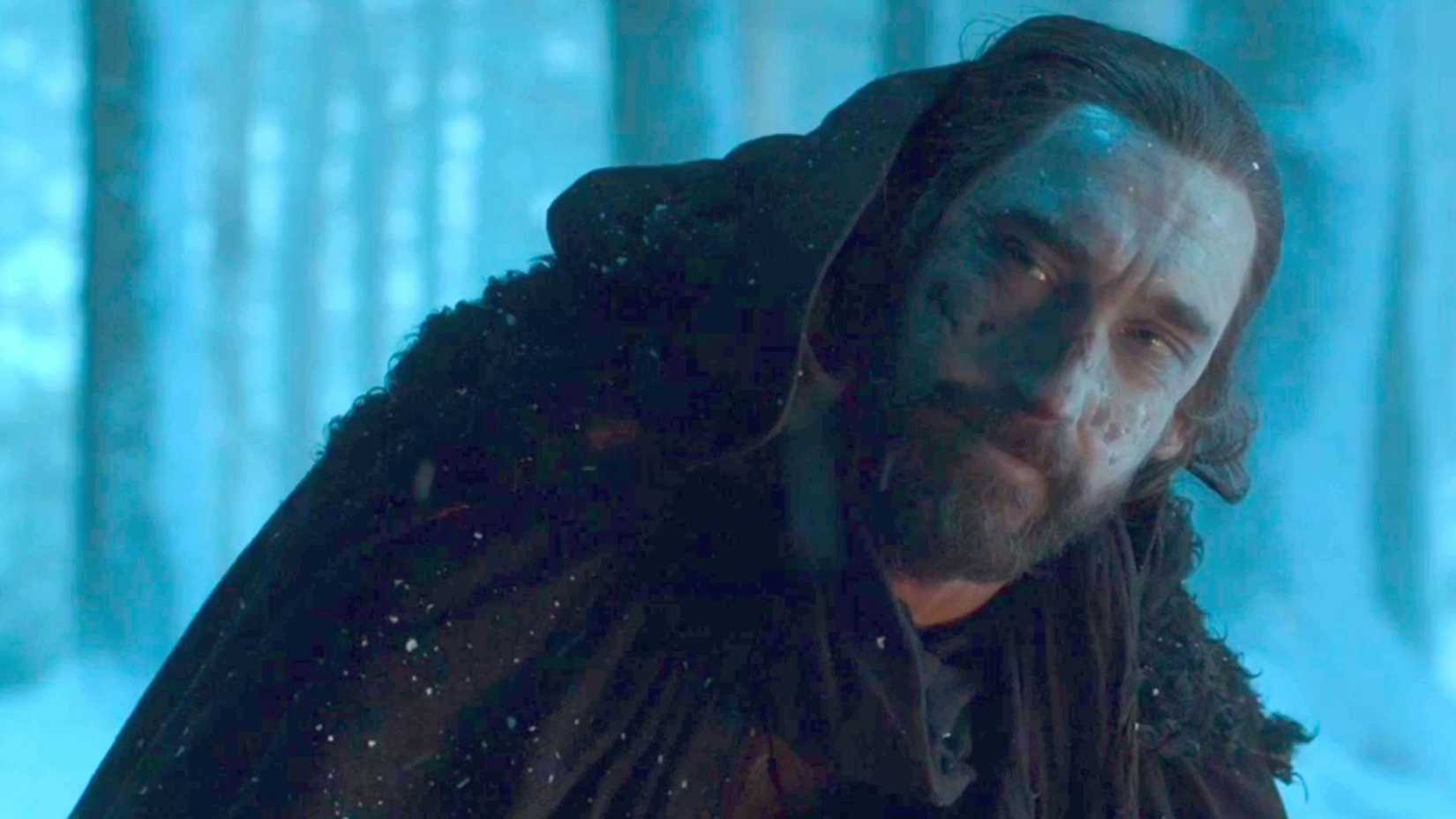
The mysterious Benjen Stark was the viewer's link to The Night's Watch, with Jon desperate to join and Benjen already an experienced and competent member. While the twist revealing the nature of The Night's Watch is one of the most underrated moments in Game of Thrones, there were still opportunities for Benjen to shine without revealing it too early. Unfortunately, he was sidelined almost immediately, leaving several unanswered questions by the end of the show.
Game of Thrones confirmed a House Stark theory that George R. R. Martin had already debunked, combining Benjen with another character in the books, which revealed his eventual fate as the seemingly undead Coldhands. That said, the show still gave no explanation for what happened to Benjen during the time he had disappeared beyond the Wall, resulting in him feeling like a plot device rather than a fully realized character.
Wendy Carr
Mindhunter
 Image courtesy of Everett Collection
The overly enthusiastic Holden Ford and the jaded Bill Tench made an unlikely "buddy cop" partnership in Mindhunter, with the two providing the rare funny moments in the show. This left little room for Wendy Carr to make a mark on the crime drama masterpiece, but she was coming into her own during season 2, with storylines following her life as a gay woman in 1970s America and a sinister subplot in which she cares for an animal that suddenly disappears.
|
Season |
Date |
Rotten Tomatoes critics' rating |
Rotten Tomatoes audience rating |
|
1 |
2017 |
96% |
95% |
|
2 |
2019 |
99% |
95% |
When the show was not renewed after its second season due to budgetary issues, Mindhunter became one of the worst Netflix cancellations of all time. There are many tragedies surrounding the loss of such a unique show, but one of the greatest is the fact that Wendy was about to be used more, with better storylines that allowed her to truly share the spotlight with Bill and Holden. As the character is based on the real life Dr. Ann Burgess, this would have been a fitting tribute to her essential research.
Eli Loker
Lie To Me
 Image via MovieStillsDB
Lie to Me started strong, with an interesting cast of characters including Eli Loker, who practices "radical honesty" by refusing to lie at all, for any reason. With Eli and his coworkers essentially being human lie detectors, he was the wild card in the series, and the center of some of the biggest conflicts. When Eli finally lies to protect a friend, it was a pivotal moment in the series, but after the storyline was resolved, the character was diluted.
Lie to Me is based on the research of psychologist Dr. Paul Ekman, who was a consultant for the show.
Eli was flawed and human, as most great characters are, and his approach to honesty was refreshing and extremely unusual in the first season. "Radical honesty" provided an interesting talking point for fans of the series, who debated his adherence to his own rules and attempted challenges to prove that his philosophy is impossible to follow. While the network TV show deserved more seasons, Lie to Me's final season went downhill, with Eli becoming sneaky and petulant, and he should have been given the chance to redeem himself.
Macchu Pichu
GLOW

GLOW's vastly different central characters set the show apart, but it became clear over time that some characters appeared more equal than others, getting more complex storylines and becoming main characters while others seemed forgotten. Carmen "Machu Picchu" Wade had the potential for several major storylines. As the resident "nepo baby," with Sam giving her the job based on her famous wrestling family, her personality and willingness to teach the other women won the group over.
She struggled with feeling left out, and season 3 ended with Carmen preparing to leave GLOW and join her family's touring wrestling group, having grown bigger than the Vegas show. Carmen's wrestling talent and growing discomfort could have been a bigger storyline, but her friendly demeanor became her defining feature and left her feeling two-dimensional. Carmen's nature made her a fan favorite, but she was tragically underused.
Rose Larkin
The Night Agent

The Night Agent season 4 all but confirms Rose's return to the show, with Peter still wanting to be with her despite her absence in season 3. This could give her the chance to develop more as a character, after being one of the more frustrating parts of the show so far. Rose has talents that are prized by the FBI, has helped them solve cases, and comes from a family of FBI agents. This set her up to become an agent herself, or reveal a twist in which she is an undercover handler testing Peter.
Unfortunately, none of this was the case, and instead Rose went from situation to situation, using her skills to track Peter down before needing to be saved. This pattern repeated without giving Rose a real resolution or direction, underusing a character who has the innate skills and potential to be much more than a love interest, and season 4 must fix this to do her justice at last.
John Abruzzi
Prison Break

Prison Break had one of the best death scenes in television, but the potential for the show to have a formidable villain died along with the character. Peter Stormare is excellent as the mob boss John Abruzzi, who has a central role in the show's titular event, and of all the "Fox River Eight" characters who escaped the show's prison, he appeared to have the best chance at surviving to become a major antagonist, either in the main show, or in a spinoff.
A mob-centered John Abruzzi spinoff could have combined the best parts of Prison Break with the gritty crime genre, while still having connections to the main show. The series gave viewers some shocking moments and unexpected deaths, including Abruzzi's, but having him be the first to die shortly into the second season wasted his potential as one of the most complex characters in the series.
Sister Sage
The Boys

The Boys ending was mostly satisfying, with the fascist Homelander crying on the floor, Billy Butcher getting one last major fight, and Kimiko finding peace and a dog after losing Frenchie. Unfortunately, one The Boys character didn't get the ending she deserved, and that was Sister Sage, who went to Disneyland after Kimiko's blast took her powers. After pulling the strings to get Homelander into power, she deserved some form of punishment, but her ending was the final injustice to her wasted potential.
Sage's powers made her the smartest person in the world, and The Boys illustrated the burden this put on her, with the character regularly lobotomizing herself to find some peace. Despite beginning as a complex and mysterious presence in the show, the character went downhill from then, with no final plan that would have made her support for Homelander's corrupted vision of patriotism seem understandable. This wasted every aspect of her, from her intellect to her loneliness, which should have been explored fully.
Cottonmouth
Luke Cage

Mahershala Ali's best movies and TV shows have included some true masterpieces, and he steals every scene he is in when playing the villainous Cornell "Cottonmouth" Stokes in Luke Cage. As such a talented and respected actor, his role could have been expanded to allow him to stay in the series for longer, but his death in season 1 wasted this potential.
That said, the character's short time on the show was not due to Luke Cage's writers, but Ali's skill. He took on the role due to its short length, agreeing to play Cottonmouth as he would only be there for seven episodes, which allowed him to continue with the other projects he was scheduled to work on. His brief appearance still gave viewers one of Luke Cage's best villains, even if his sudden death felt unnecessary at the time.
Oslo
Money Heist

Netflix's Money Heist is perfect from start to finish, with the series being a masterclass in character writing, Virtually every one of Money Heist's characters is flawed, fascinating, and either endearing or terrifying, and sometimes both. However, out of the eight team members inside the Royal Mint, Oslo is drastically neglected. Entering as hired muscle along with his cousin Helsinki, he spends most of the time following orders and looking menacing.
While Helsinki's kindly nature and sense of humor are soon revealed, Oslo is the only one of the robbers whose character is not fully explored. His Spanish is not as good as Helsinki's, which results in his cousin acting as a translator, but as The Boys' Kimiko and Breaking Bad's Hector Salamanca prove, a character does not need to speak to have an impact. When Helsinki is forced to mercy-kill him, Oslo's wasted potential is made clear, because the first robber to die would have had a greater emotional effect on the viewer if we had got to know him first.
- Homepage
- Entertainment
- 10 Great TV Characters That Were Totally Wasted





 English (US) ·