


What Is Longitudinal Chromatic Aberration and Why Is it So Hard to Correct?
 2 hours ago
1
2 hours ago
1
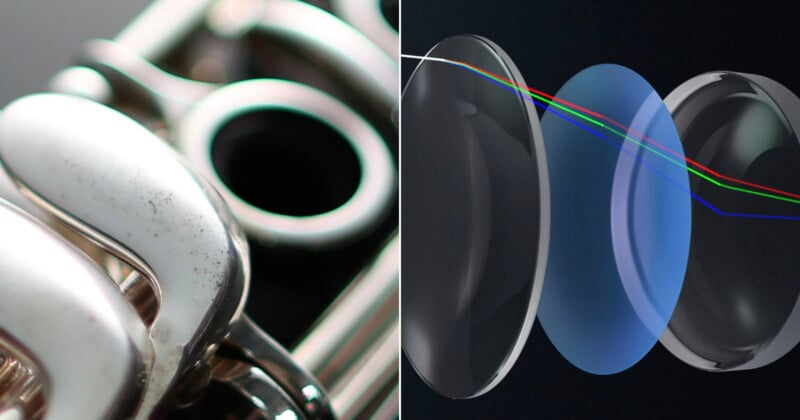
Have you ever looked at a photo and wondered, “What’s with all the green and pink colors around high-contrast edges?” That’s longitudinal, or axial, chromatic aberration. LoCA. It’s common, very difficult to prevent optically and nearly as hard to remove during post-processing.
What Is Longitudinal Chromatic Aberration?
LoCA isn’t the only type of chromatic aberration out there, and both it and lateral, or transverse, chromatic aberration happen for similar reasons. Broadly speaking, chromatic aberrations occur when different wavelengths of light focus at different points.
In the case of LoCA, the issue is that red, green, and blue wavelengths travel through elements inside a lens and focus at different points on the focal plane, whether that is film with an analog camera or the image sensor in a digital one.
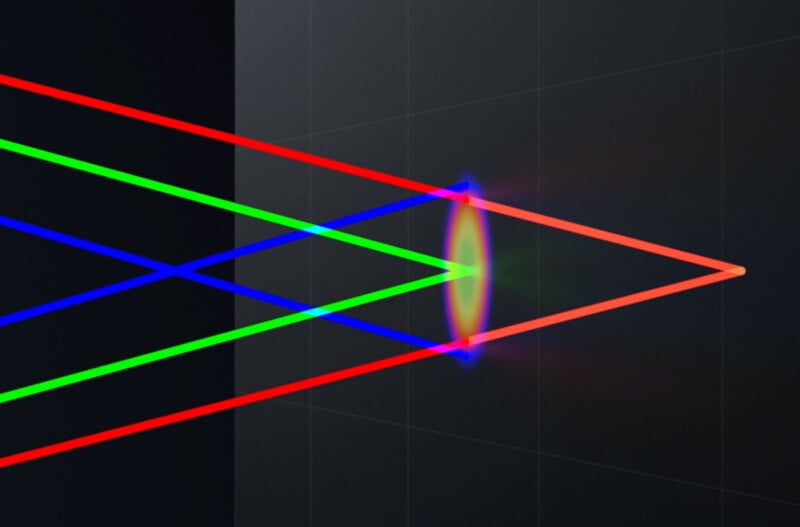 Credit: Canon
As Canon explains in a video it shared with PetaPixel for this story, “Ideally, all wavelengths of light passing through a lens should converge at a single point on the image plane.” In the event this occurs, there is no chromatic aberration.
The problem is that different colors of light refract differently through glass, meaning that “slight misalignments are inevitable.”
When misalignments are very minor, it may not be a major issue for most photographers. However, when they are significant, which is more often the case with extremely fast-aperture ones with very large glass elements inside, it can be very distracting. Many photographers don’t like noticeable color fringing in their photos, after all. Since LoCA primarily affects bokeh, bad LoCA control can prove especially distracting.
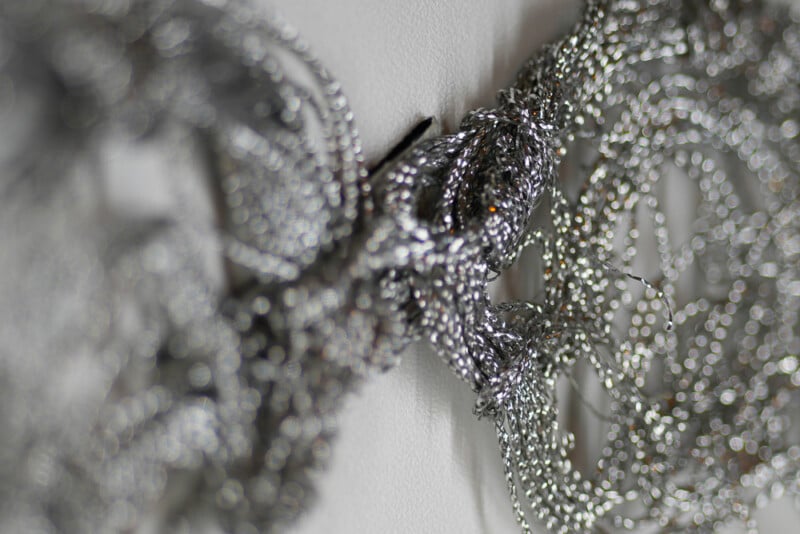 Even extremely good lenses, like the Sony FE 135mm f/1.8 G Master, can exhibit LoCA. | Test shot by Chris Niccolls
“The wavelengths of red, green, and blue light are different, causing them to focus at different positions,” Fujifilm tells PetaPixel.
When you are photographing something, such as a person, you have a focal plane, typically near the eyes. Anything in front of or behind that plane of focus is, of course, out of focus. Imagine a perfectly corrected lens, which is practically impossible. In this case, all wavelengths of light travel through the lens and converge at a single, perfect point. This means that out-of-focus elements will be perfectly neutral, with no color fringing.

In reality, some light is misaligned in one direction, and other light misses the mark in another direction. A fairly common situation is green misalignment behind the focal plane and red or pink misalignment in front of it. So out-of-focus areas closer to the camera may show magenta fringing, while out-of-focus elements in the background may show green edges.
 The Zeiss Otus ML 50mm f/1.4 exhibits strong LoCA. High-contrast edges in front of and behind the subject exhibit significant color fringing. | Test shot by Chris Niccolls
When these misalignments occur off-axis, lateral chromatic aberration can occur. This appears outside the central portion of the image and is typically a single color, such as blue or purple. Because it is not different colors, it is easier to selectively remove during post-processing. It’s more common with wide-angle lenses or those without advanced optical elements.
How do Lens Manufacturers Reduce LoCA?
So Canon and Fujifilm both explained what longitudinal chromatic aberration is and what causes it, but what do Canon, Fujifilm, and Nikon say about correcting chromatic aberrations?
“Some new optical technologies that have been implemented to counter the effects of LoCA is Nikon’s ‘multi-focus’ systems on select lenses (especially macro lenses, which have high susceptibility to LoCA),” Nikon’s Mark Cruz, Sr. Manager, Product DCIL, Nikon Inc., tells PetaPixel. “This new system achieves extremely high focusing accuracy at close distances by simultaneously controlling two AF drive units. This results in a high-level of compensation for aberrations at close distances.”
 Lens designers want to avoid THIS. | Credit: Canon
Cruz continues, explaining that advancements in glass processing and manufacturing techniques have enabled Nikon to shape its glass more precisely. By combining different convex and concave lens shapes and with significantly more precise glass elements, Nikon’s engineers have been able to reduce chromatic aberrations and ensure that different wavelengths of light are better aligned on the image sensor.
This is especially important with large-diameter aspherical lenses, which have historically been challenging to machine and grind with the required level of accuracy.
“Another contributing factor to the reduction of LoCA has been Nikon’s advancements in high-refractive-index (HRI) glass, while improved manufacturing processes has led to higher surface accuracy. The latest generation of this molded glass material effectively compensate for various lens aberrations. Additionally, we continue to utilize spherical and aspherical elements which deliver outstanding surface accuracy with improved corrective capability,” Cruz adds.
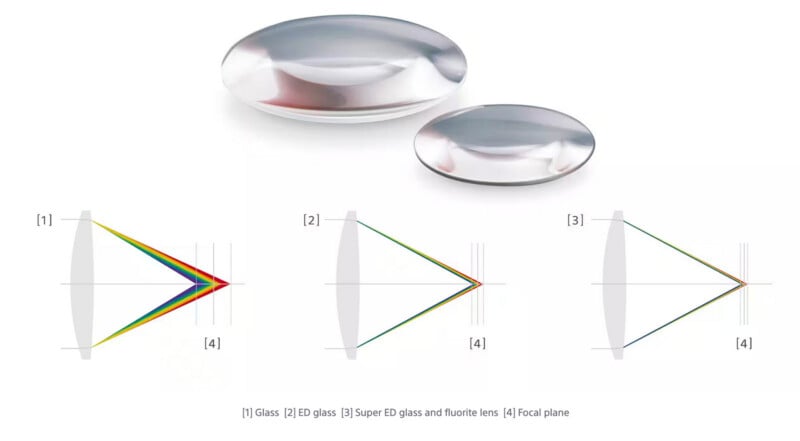 This excellent graphic from Sony illustrates the differences between ED and Super ED glass as it relates to chromatic aberrations. | Credit: Sony
As for Fujifilm, it minimizes longitudinal chromatic aberrations by using ED and Super ED lenses. ED glass, used by all the major manufacturers, significantly reduces chromatic aberration. “ED” stands for Extra-low Dispersion, which means light scatters less as it travels through the lens.
Super ED glass, as its name suggests, is even better.
“We minimize the longitudinal chromatic aberration by using ED lenses and Super ED lenses that reduce light dispersion, as well as by designing lens systems that combine concave and convex elements to counteract the aberration,” Fujifilm tells PetaPixel.
While it may seem like a great idea for companies to jam as much ED and Super ED glass as possible into their lenses, it is, unfortunately, not that simple. Correcting for chromatic aberrations is but one focus for lens designers. They must also ensure the lens is sharp, offers good contrast, and resists flare. Lenses also must be affordable, have fast focusing, and not weigh a ton. There are many objectives in lens design, and some of them work directly against each other, forcing engineers into a challenging give-and-take process.
“We optimally design the lens configuration while considering the best balance of size, weight, and cost,” Fujifilm says. “For example, in large-aperture lenses like the XF500mm F5.6, the lens group consists of 21 elements, including 5 ED lenses and 2 Super ED lenses. The XF500mm F5.6 effectively suppresses longitudinal chromatic aberration using five ED lenses and two Super ED lenses, allowing the focus lens to consist of just one element. Since increasing the number of lenses in the focus group also increases its weight, we carefully consider this aspect during the design process.”
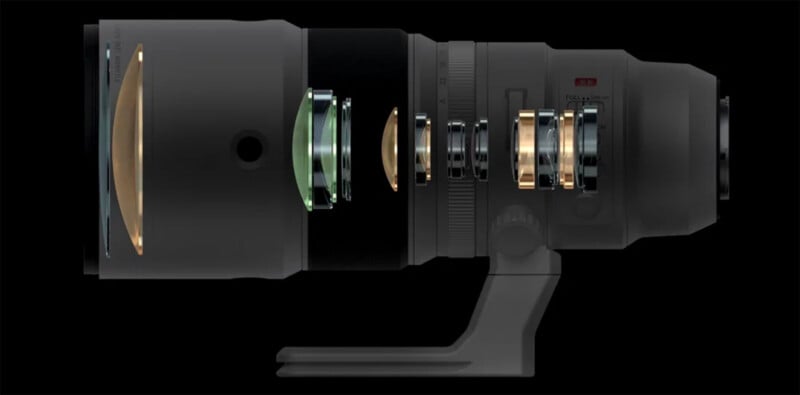 Fujifilm XF 500mm f/5.6 R LM OIS WR optical design | Credit: Fujifilm
In Canon’s case, its approach depends on the lens. For lenses targeting a more accessible price point, a good way to reduce chromatic aberrations is to use convex and concave lenses carefully. This is a basic approach, but it can be effective. It basically bends different wavelengths of light in opposite directions, trying to cancel out refractive errors. It’s a delicate balance.
Canon has “ED” lenses, too, although they are called UD (Ultra-low Dispersion). Canon even grows its own synthetic fluorite crystals to create these specialized optics with significantly reduced refractive indices.
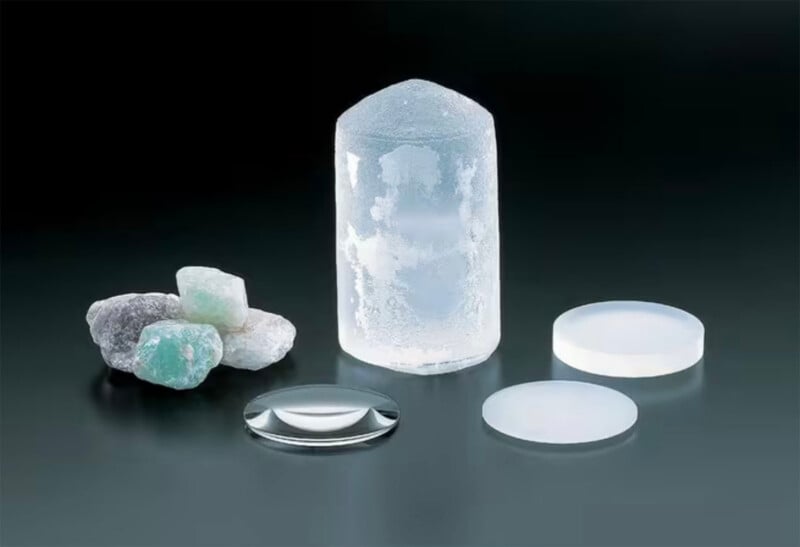 Image credit: Canon
As Canon explains, this approach is not always the best one. For lenses with large apertures (fast lenses) and those with shorter barrels, it is not always feasible to use optical layout to adequately bend light so that it converges. It requires many lens elements, and there is not always space for them.
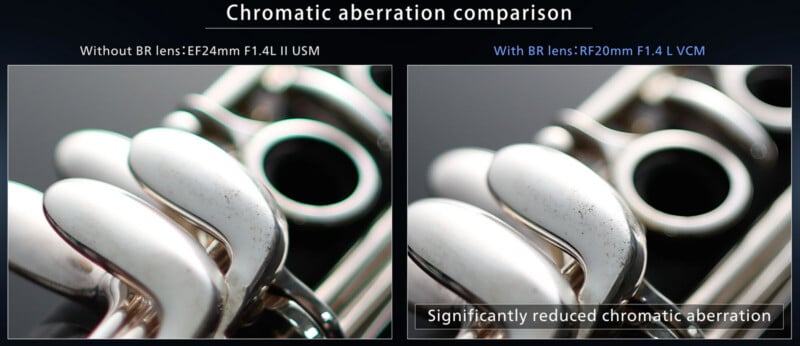
In cases like this, where Canon wants compact lenses with high image quality and minimal chromatic aberration, it developed an all-new type of glass, Blue Spectrum Refractive (BR) elements.
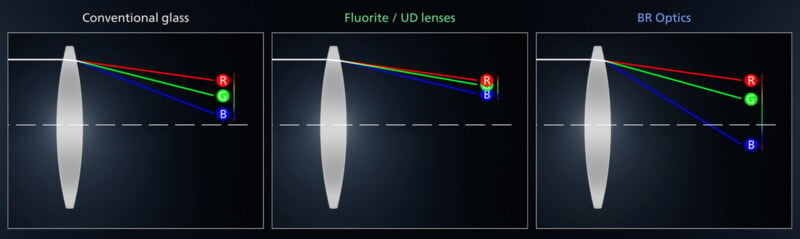 Credit: Canon
“Blue (short wavelength) light is particularly troublesome for lens engineers because it’s hard to correct its path through a lens element in the same way as longer-wavelength green and red light, which means it can cause blue fringing,” Canon explains. “However, in August 2015, Canon introduced the EF 35mm f/1.4L II USM, the first lens to feature a Blue Spectrum Refractive (BR) element. The BR element uses a new organic optical element that has different dispersion characteristics from standard elements. It is sandwiched between concave and convex glass lenses, to control the path of blue light and minimize chromatic aberration.”
I’ve seen this BR element firsthand in Japan, and it’s very impressive. A decade in the making, BR optical elements use anomalous dispersion to alter how blue light refracts within the lens.
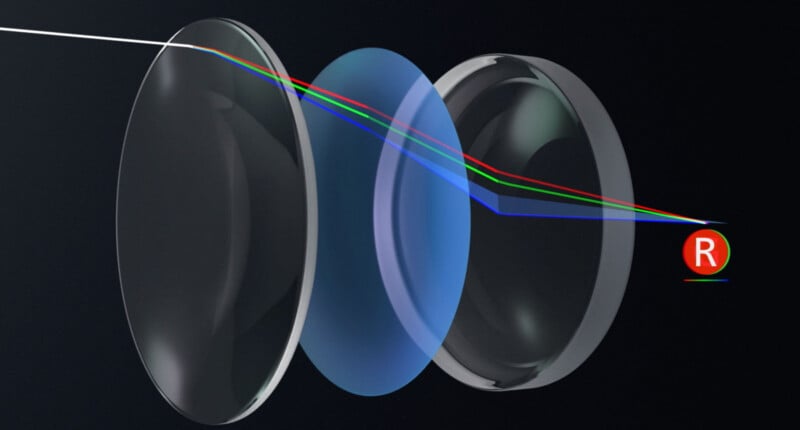 Credit: Canon
The BR element itself is very thin and makes it much easier to focus blue wavelengths of light on the image sensor. Basically, it keeps blue light from straying off the desired optical path and, alongside other optical approaches, keeps red, green, and blue light focused on a single point on the focal plane.
 Canon’s advanced optical technology helps keep images clean, like this sample image from the RF 85mm f/1.4L VCM, which Chris shot at Canon’s Utsunomiya lens factory. | Photo by Chris Niccolls
 Credit: Canon
The Software Side
It is also worth considering how manufacturers combine optical technology with software to further improve image quality. Nikon, for example, recognizes that in some situations, LoCA remains visible even with lenses featuring advanced optical technologies. In these cases, its NX Studio software has specialized LoCA corrective measures that can be applied to both RAW and JPEG images.
Canon uses its Neural Network technology to achieve similar results inside its own software, Digital Photo Professional.
Third-party image editing apps, like Adobe Lightroom, DxO PhotoLab, and more, include chromatic aberration corrective tools.
However, as mentioned at the top, given the causes of LoCA and how it appears in images, it can be very challenging to correct it using software. It can be reduced, yes, but the most effective way to eliminate LoCA is to do so physically at the time of capture.
Removing LoCA Is Very Difficult
There is no question that modern lenses are significantly better at dealing with longitudinal chromatic aberration than their vintage counterparts. New lenses deliver cleaner images than ever and much more effective aberration control for many reasons, including more precise glass elements, advanced glass materials, and often a little extra help on the digital correction side.
 Credit: Canon
Photography is all about light, and lenses are as good as they have ever been at bending different wavelengths of light in the perfect way so that they converge on a single point. As camera manufacturers explained to us, bending light is a very delicate dance, and eliminating those pesky chromatic aberrations is remarkably difficult. An awful lot of time, money, and engineering have gone into making your photos just that little bit cleaner.






 English (US) ·